Bodywork designed
to make your body
work.

Targeted Pain Relief for Peak Performance and Ultimate Relaxation

Mexía Bodywork is THE total physique solution designed to restore youthful movement, energy, and well-being. Utilizing the world’s most advanced techniques, Dario Mexia heals pain at its root and rejuvenates your body.

Look at our available treatments.
Body Work Designed To Make Your Body Work

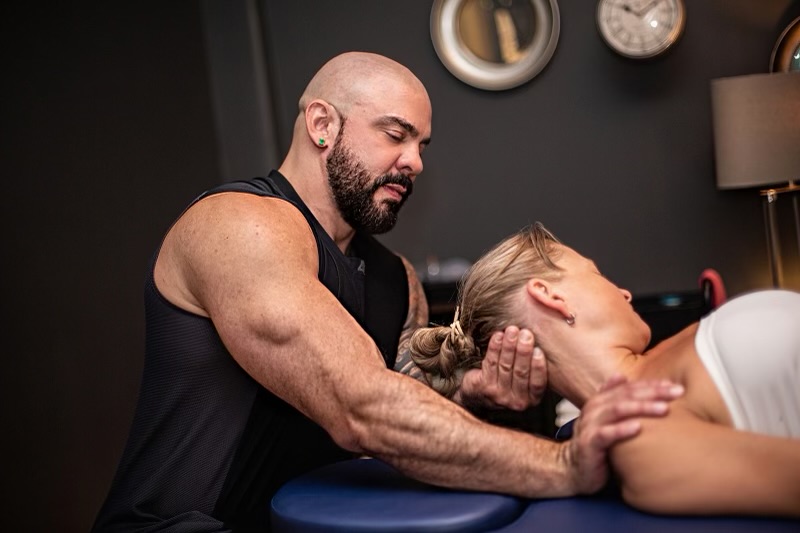
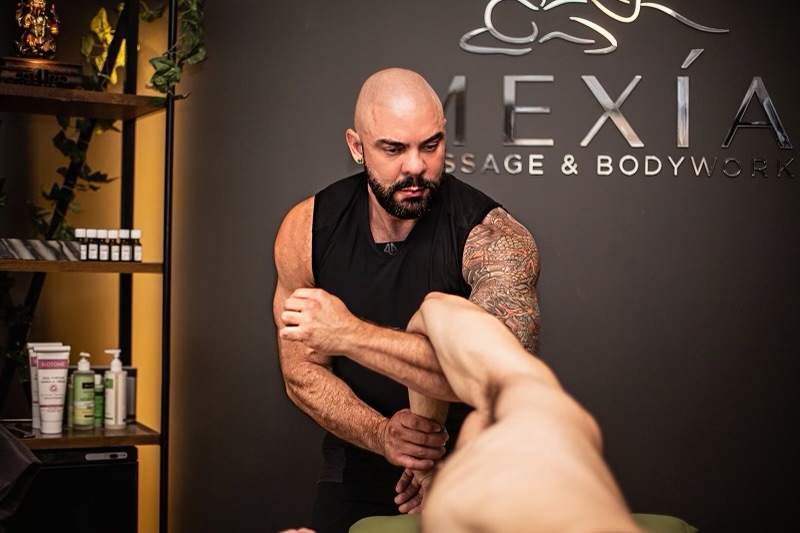
Bodywork is a transformative form of physical care that synthesizes the best of massage therapy, healing cupping and assisted stretching exercises to give your body the relief it needs to perform at its absolute best. It’s more than just another trip to the massage parlor. It’s a total body transformation for relief that lasts.

Learn about the benefits of bodywork.

Best of DC two years in a row

Mexía Bodywork was recently voted Best of DC for "Best Therapeutic Massage". Thanks to the DMV community for supporting our small business and allowing us to provide compassionate, best-in-class service.

Best of DC 2024
Best of DC 2025

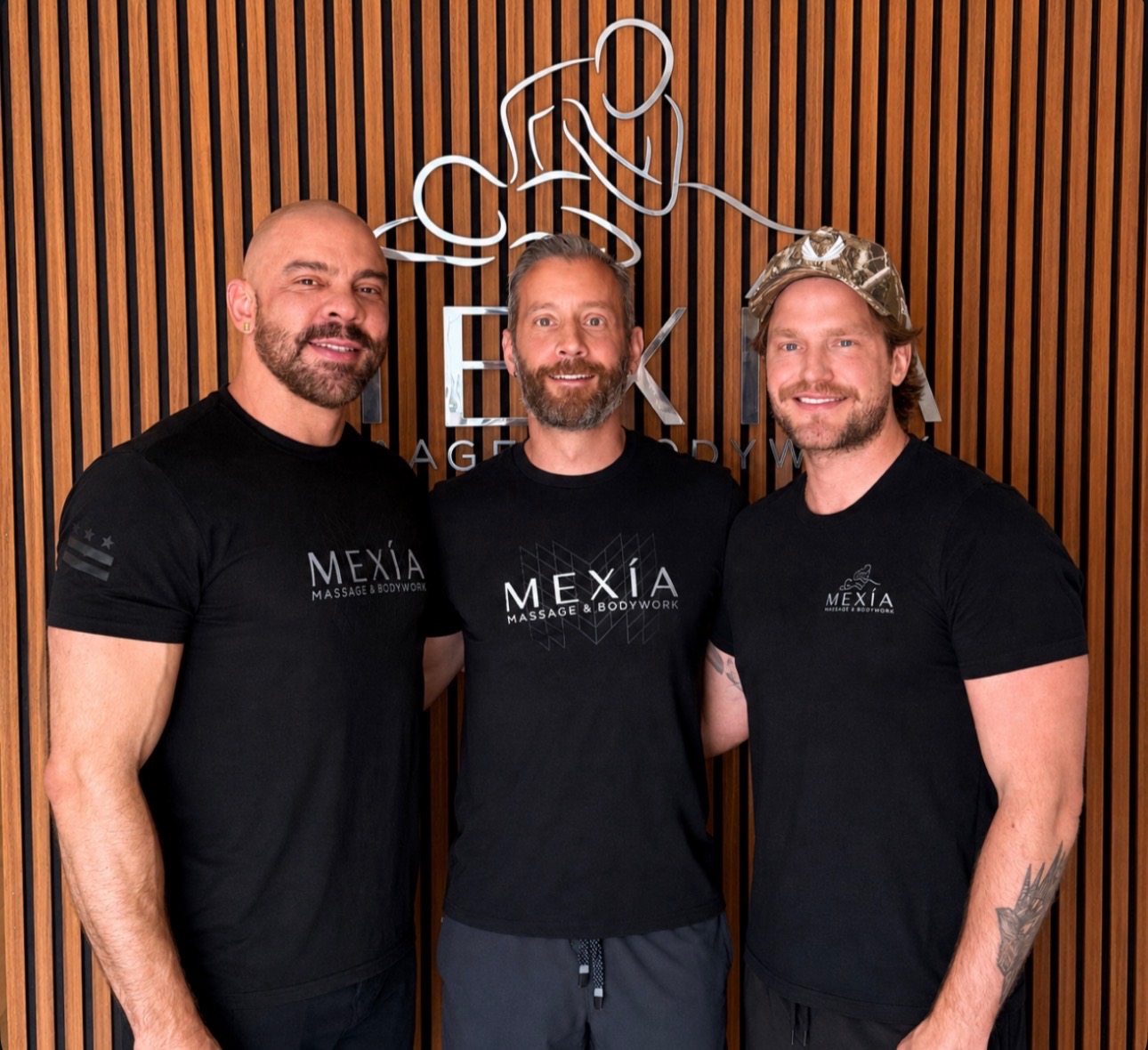
Meet Our Team!

Our team is growing due to increasing demand but the quality of our services and our commitment to satisfaction remains the same. Every one is built differently and we are here to help you find the kind of custom bodywork that is right for you.

Book your appointment today

Latest Reviews

(449)
After having weeks of neck/shoulder pain I was recommend by a co-worker to try this place. I’ve become a little skeptical of spa massages, where “deep tissue” is never really deep tissue. Hence I was inclined to try a place that is more branded for massage therapy. I was recommended Ryan, who did a fantastic job. He really focused on my problem areas and after two days recovery, my neck pain is practically nonexistent. The only thing that could’ve made my experience better was booking a longer massage. I will be back! Thanks Ryan!
Read more
Colin Muth
Colin Muth
12 days ago
I’ve personally known Ryan now for years. He’s so talented at what he does and cares about the individual experience. That’s very important for a great massage! He is excellent. There is a reason these guys are booked and busy. I have not had a better massage in DC.
Read more
Dario is fantastic! He was able assess areas that are causing problems for me and show me exactly how and why they are problematic. His approach to healing ailing elements of the body is efficient and effective, and the best massage therapist I have been to. After my first session I felt immediately more openness and freedom of movement in areas that have been giving my problems for more than 15years. Highly recommend!
Read more
Dario is an extremely knowledgeable and passionate provider. He tailored a treatment for my body and conditions which resulted in greater mobility and less pain. I look forward of returning in the future.
Read more
Hugo Anz
Hugo Anz
1 month ago
Rian truly has a gift in his hands. I treated myself to a massage with him for my birthday, and it was the best gift I could’ve given myself. He’s very professional, and I highly recommend him :)
Read more
Paul Muñoz
Paul Muñoz
1 month ago
Dario is Solid! Strong techniques. Strong hands. He’s a great listener and focused on my needs and was intentional with our time. Very skilled and talented.
Read more
Michael
Michael
1 month ago
Ryan is awesome! One of the best massage therapists I’ve been to and will be back. Couldn’t recommend more
Read more
john zullo
john zullo
1 month ago
After doing some research for massage therapists in DC I had read that Mexia Massage was one of the best. It may have taken a few months to get an appointment but Dario does not disappoint. A great studio, engaged discussion about expectations, and his powerful and intuitive touch all made for an outstanding massage. I look forward to my next session.
Read more
Michael Mannello
Michael Mannello
1 month ago
Dario was great. He’s Very knowledgeable about his craft. Highly recommend

Our Cause & Mission

Here at Mexia Massage and Bodywork, our cause is to enable people to experience an ever greater comfort in their own bodies, where well-being is restored, nurtured, and sustained indefinitely.


Our goal is to help you move better, feel better, and live pain free. You are the reason we continue to learn and refine our craft, always striving to provide the most effective and advanced care possible. Through Mexia Massage & Bodywork, we create personalized treatment plans tailored to your unique needs so you can get back to doing what you love, stronger than ever.

Your Specialists
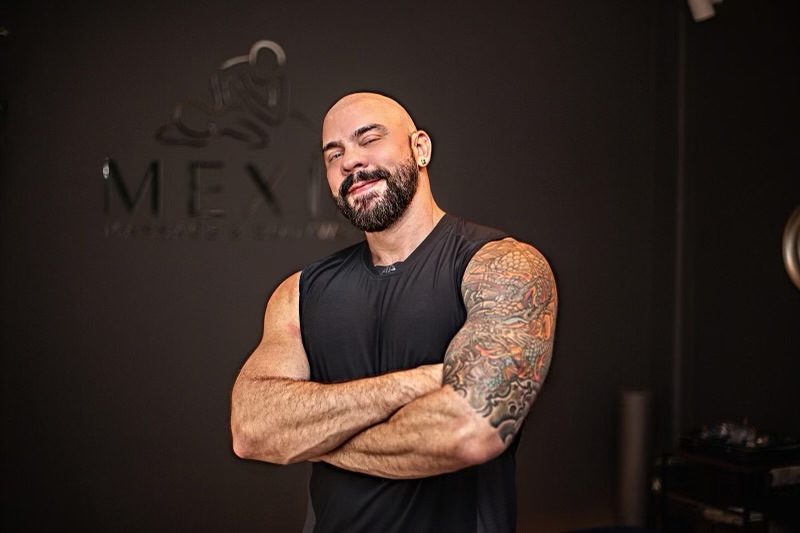
Dario Mexia

Dario


Dario Mexia is not your average massage therapist. His last name, "Mexia," comes from an old Spanish variant meaning "medicine" or "healer" , a fitting legacy that fuels his passion for helping others move, feel, and perform at their best.


Originally from Colombia, Dario earned a Bachelor's degree in Economics before moving to the U.S. in 2012. However, his true calling led him to the world of manual therapy and bodywork. After completing a massage therapy program and becoming a certified personal trainer, he has continued to refine his craft through advanced training in Structural Integration, Myofascial Release, Fascia Stretch Therapy , Cupping Therapy (a.k.a Myofascial Decompression), Scraping Therapy, Sports Massage and Medical Massage.


As a former semi-professional volleyball player, Dario understands the demands placed on the body whether you're an athlete, an active professional, or someone dealing with chronic tension. His approach goes beyond relaxation; he specializes in restoring mobility, relieving pain, and optimizing performance through customized, hands-on techniques.

Ryan Holbert

Ryan


Ryan Holbert is a licensed massage therapist, bodyworker, and certified Accufit Therapist with a deep passion for helping others feel better in their bodies because he knows firsthand what it means to rebuild from the ground up.


With over a decade of experience in massage and bodywork, Ryan draws from a diverse background that blends clinical knowledge with intuitive touch. His approach is deeply informed by both science and personal transformation. Years ago, Ryan faced a life-altering diagnosis: a brain tumor that left him relearning how to walk, move, and reconnect with his own body. That journey, filled with physical therapy, resilience, and self-discovery, reshaped not only his life but also his philosophy as a healer.


Ryan specializes in therapeutic massage, neuromuscular techniques, and advanced bodywork for pain relief, injury recovery, and performance optimization. He’s particularly skilled at working with athletes, chronic pain clients, and those navigating post-surgical or neurological recovery. His training in Accufit therapy allows him to offer a cutting-edge, non-invasive approach to muscle activation and strengthening.


Clients often say Ryan brings a rare combination of strength, sensitivity, and presence to the table - someone who truly listens to the body and meets it where it is. Whether you’re in need of deep restorative work or focused therapeutic care, Ryan’s work is rooted in empathy, precision, and purpose.
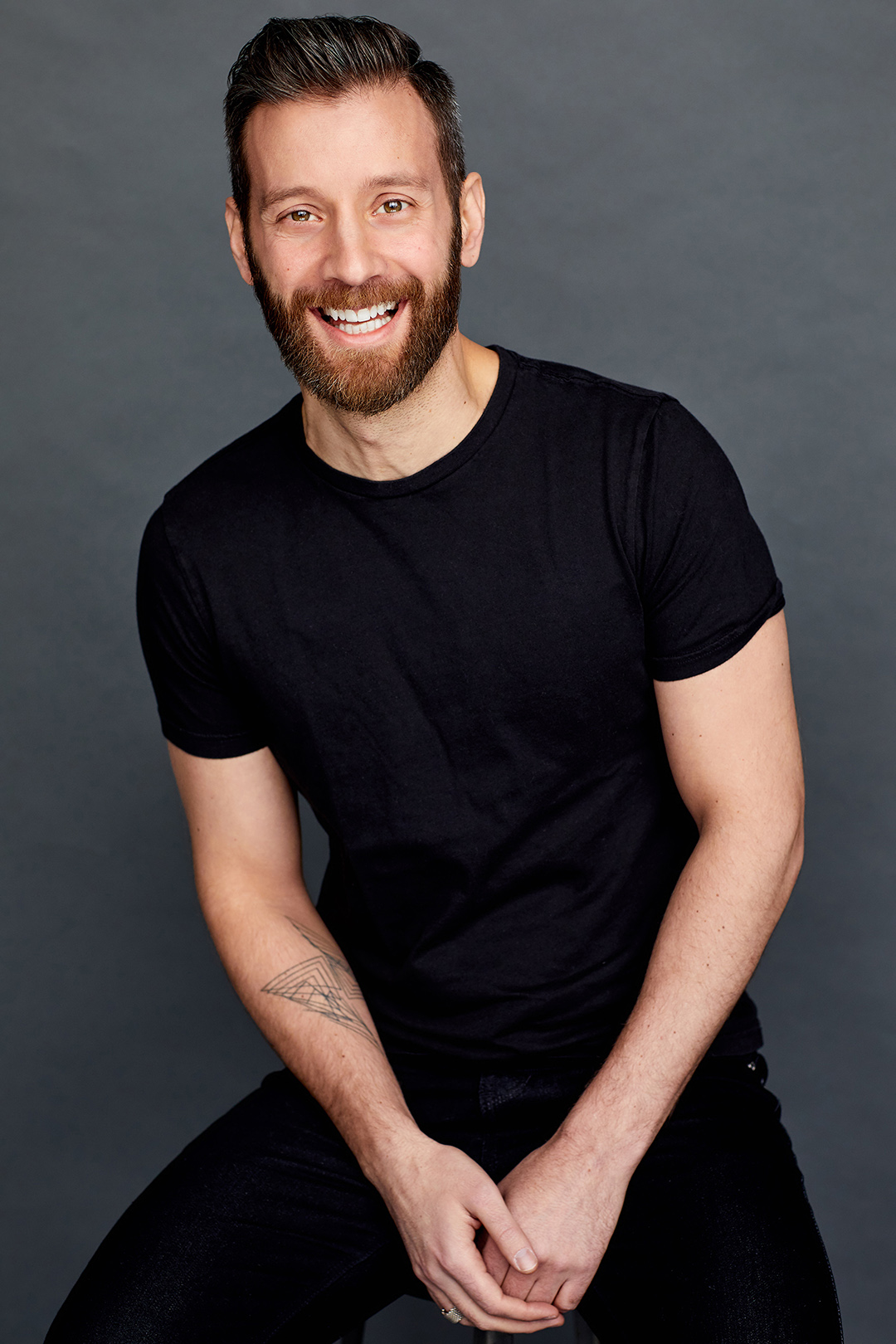
Bucky

Bucky


With over a decade of experience in the health and wellness industry, Bucky brings a diverse range of finely honed skills from his work as a personal trainer, yoga teacher, and somatic healing guide. Through his soft, grounded approach, the body is invited to unwind, heal, and release tension in its own natural rhythm.


Outside of his work as a wellness guide, Bucky is an avid reader, home cook, and world traveler.

Instagram

Your hips want movement in all planes of motion.  If you lift, run, CrossFit,...
Comments Count
7
Your hips want movement in all planes of motion. If you lift, run, CrossFit, bodybuild, or sit a lot… they get overused fast. Now here’s where people get it wrong 👇 👉 Hip Impingement (FAI) This is joint compression. Femur head pinches tissue in the socket. You’ll feel it at end-range hip flexion: • Deep squat • Knees to chest • Compressed positions 👉 Hip Flexor Adhesions / Restrictions This is a tissue issue. You’ll feel it at end-range hip extension: • Lunge stretch • Back leg of split stance Most people overuse hips in ONE plane (sagittal: sitting, walking, squatting) and ignore frontal + rotational movement. Different problem = different solution. Move your hips in all planes.
MFR + Movement   1. Fascia responds to shear and glide  Improves hydration, r...
Comments Count
2
MFR + Movement 1. Fascia responds to shear and glide Improves hydration, reduces densification, and restores glide. 2. You’re training the nervous system When the client moves while you apply tension: - Reduce protective tone - Improve motor control - Create safer range-of-motion gains 3. It increases range faster and with less guarding Active and assisted movement (PNF-style, load + glide techniques) improves ROM without triggering as much threat response compared to aggressive passive pressure. Science reality check (no BS) Research supports: - Improved ROM - Reduced pain sensitivity - Better tissue glide and hydration - Short-to-medium term functional improvements . What it does NOT prove: - You “break fascia” - You “release adhesions like tape” - You permanently remodel tissue in one session
This stretch runs from your toes all the way up to your chest.  Be aware of t...
Comments Count
4
This stretch runs from your toes all the way up to your chest. Be aware of the head: if there is too much hyperextension in the neck, the stretch in the belly will be counteracted by the shortening of the SCM. Fix it 👇 Chin slightly tucked. Head tall.
Quads + Glute Max stretch combo 👇  My goal here is to target the gluteus max...
Comments Count
7
Quads + Glute Max stretch combo 👇 My goal here is to target the gluteus maximus and the rectus femoris/quads. I’m also layering in light PNF (about 10% client effort against my resistance) to help safely increase range of motion and improve tissue response.
If your client is holding their breath… it’s not “deep work.”  It’s your nail...
Comments Count
13
If your client is holding their breath… it’s not “deep work.” It’s your nails.
Guiding the client to slowly bring their arms in and out. That movement creat...
Comments Count
6
Guiding the client to slowly bring their arms in and out. That movement creates a natural pin-and-stretch, which is great for finding sticky, restricted areas. What I like about this approach is that it’s not just something done to the client. They can feel where the tension lives, notice how their shoulder moves, and start to understand their own restrictions.
Think of this as a smarter setup, not a fancy trick.⬇️  This semi-prone, side...
Comments Count
2
Think of this as a smarter setup, not a fancy trick.⬇️ This semi-prone, side-lying position makes it easier to work on areas that are tough to reach when someone is fully face-down or on their back. It’s more comfortable for clients because it puts less stress on the low back, and it gives me better access to the hip flexors. It’s especially helpful for people whose low back pain flares up in a prone position, and it allows for effective hip flexor mobility work without forcing the body into something it doesn’t like. Sometimes the biggest difference isn’t the technique — it’s the position.
The goal here is ease, not force.  I’m anchoring near the ischial tuberosity ...
Comments Count
7
The goal here is ease, not force. I’m anchoring near the ischial tuberosity (where the hamstrings attach) and creating a slow, wave-like stretch through the tissue. Nothing sudden. Nothing aggressive. The most important part? Breathing. I match my rhythm to the client’s breath, so the stretch feels safe and predictable. That’s what tells the nervous system it can let go. When stretching is controlled, synchronized, and intentional, it downregulates the system and creates a sense of calm. Good stretching shouldn’t feel like you’re fighting your body. It should feel like the body agreeing with you.

Discover the Difference
Expert Insight,
Advanced Approaches, and
Compassionate Care can Make